
Published case study — attributed implementation
AngajatAICompany knowledge and internal operations
AI agents for everyday business work.
- The need
- Teams want AI to work with their documents and tools, not require a fresh explanation for every task. They also need to know what it is doing, what is blocked and what needs approval.
- What we built
- We built a workspace where AI agents use company knowledge, carry out assigned tasks and run scheduled work through approved tools. Permissions, progress and human review remain visible.
Illustrative stock photo, not project imagery.Christina Morillo / Pexels
Published case study — attributed implementation
This page documents only the structure or implementation supported by the recorded sources. No measured outcome or testimonial is currently approved for publication.
The published web experience
Explore selected screens from the project. The complete site opens separately for current content and full interaction.
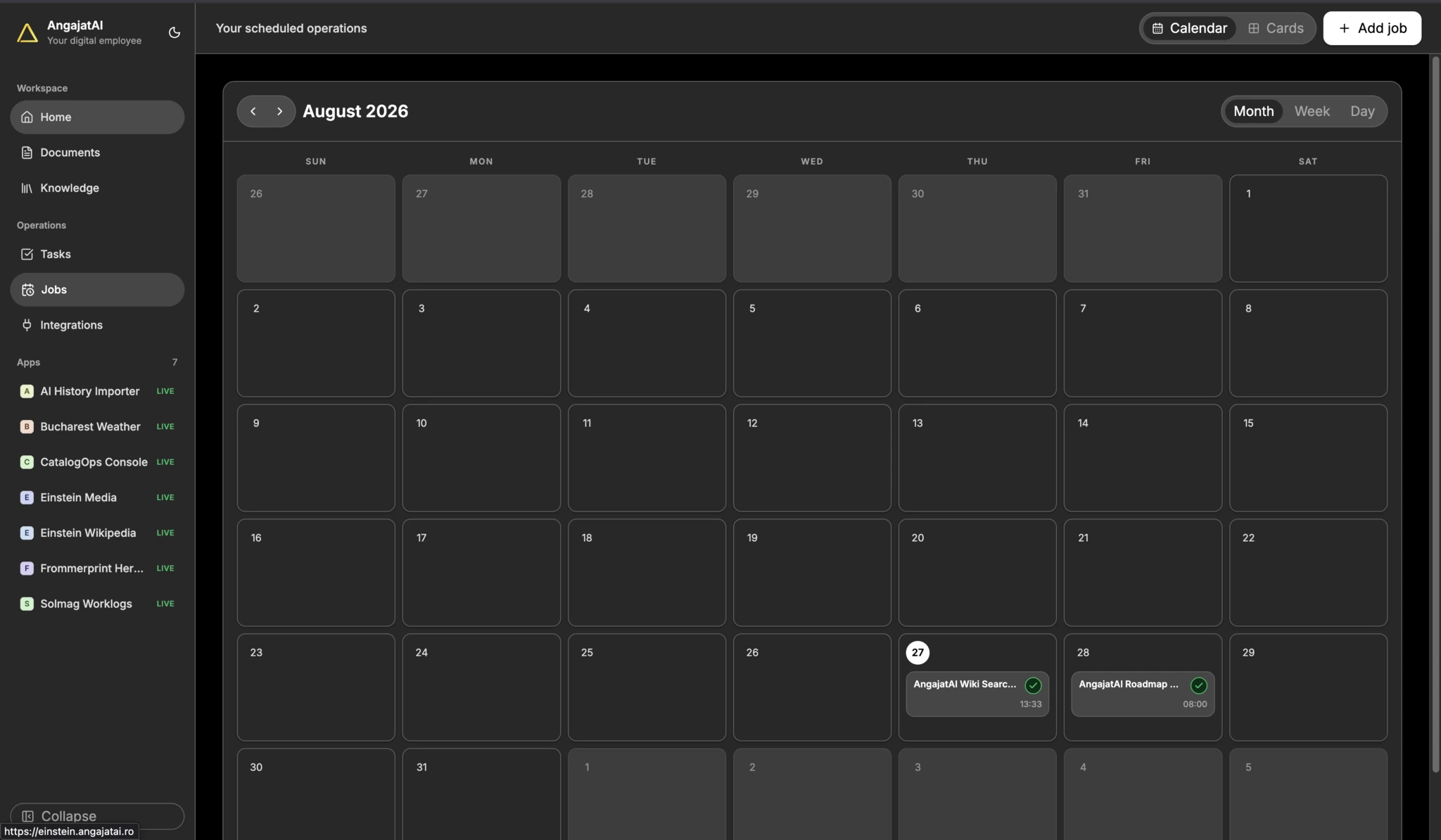
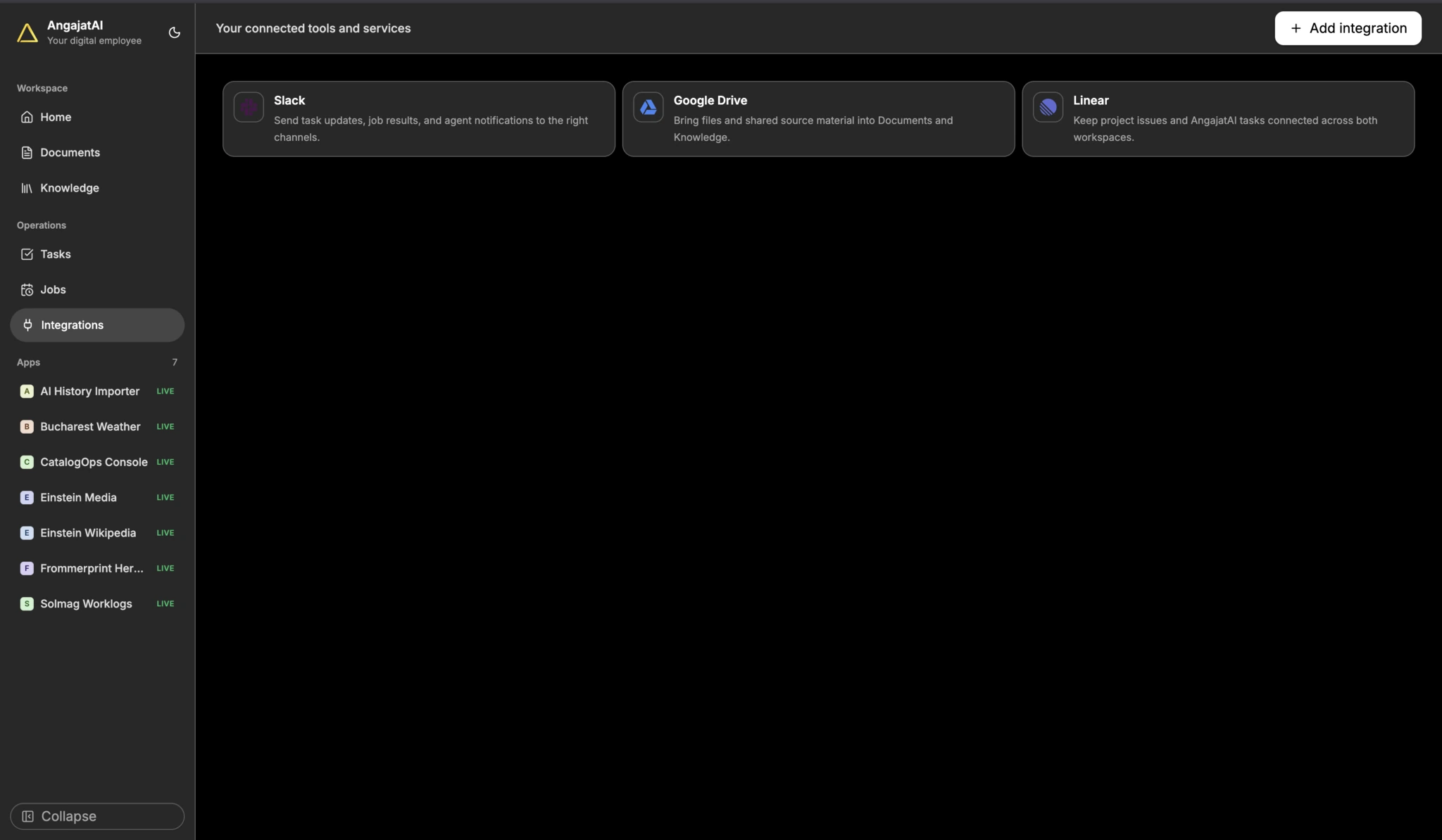
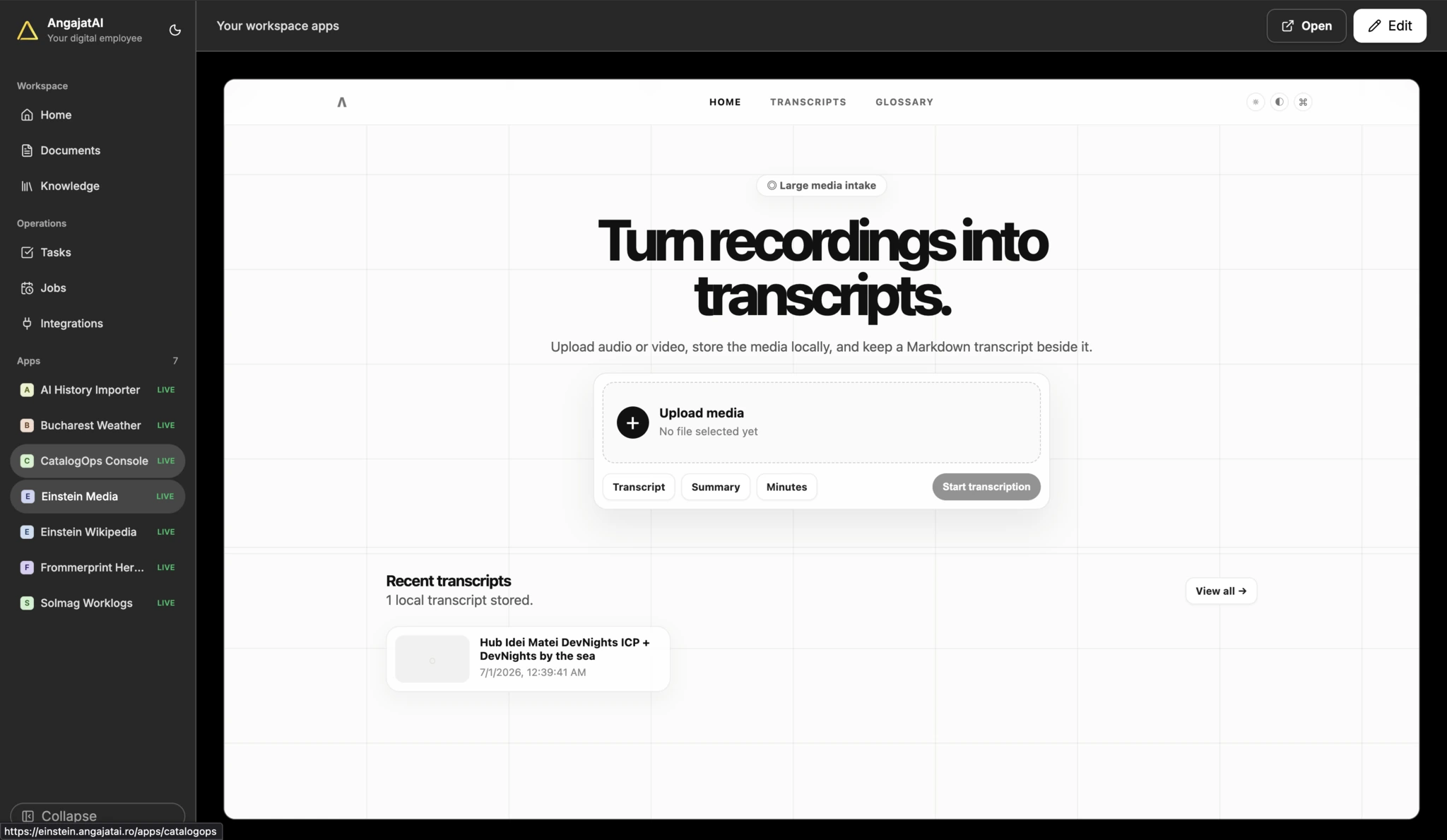
Operate from one agent workspace
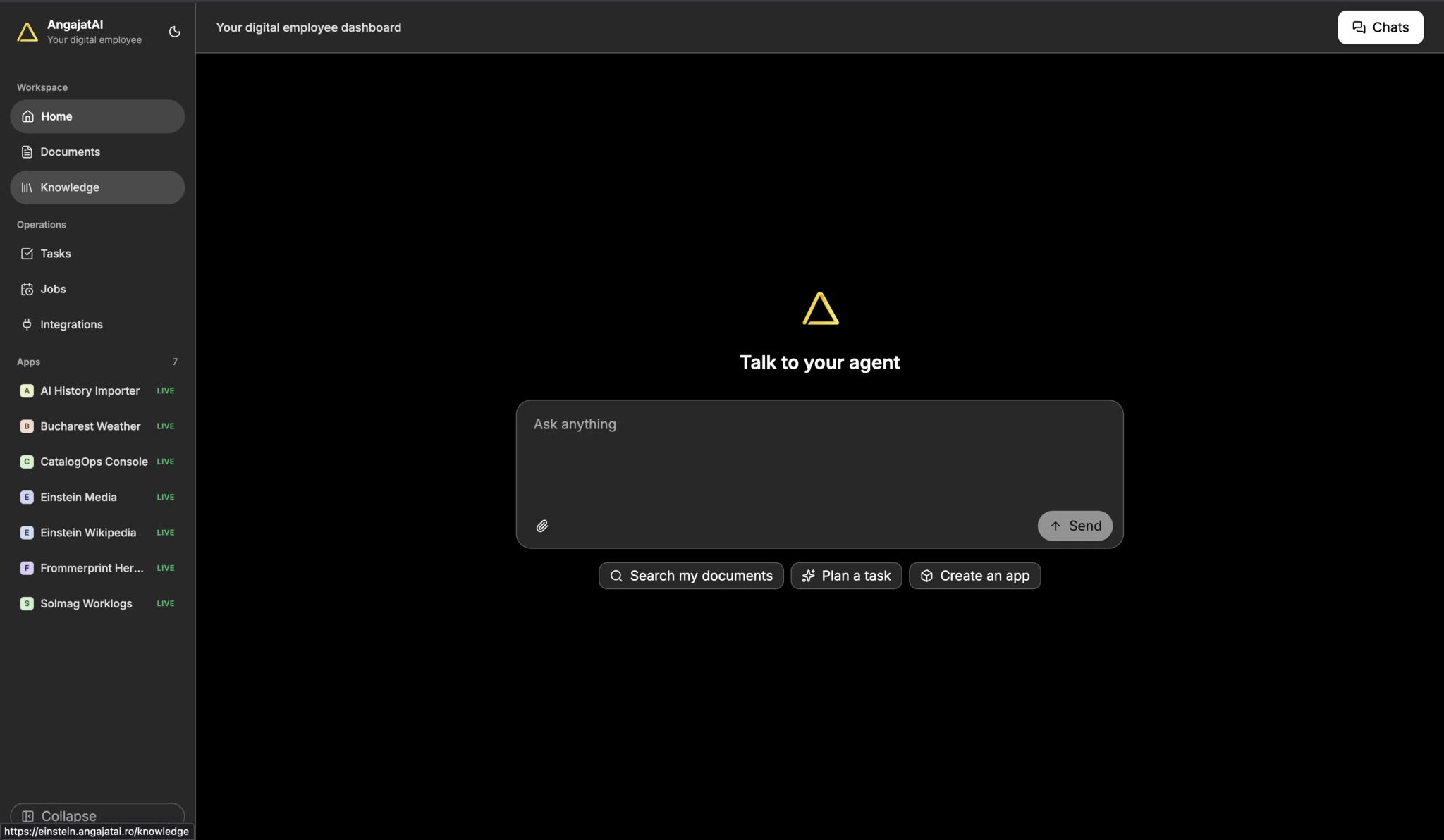
The dashboard gives people one place to talk to their digital employee, search company documents, plan work and start purpose-built applications. Agents share the same operating environment instead of living in separate chat windows.
Captured from the published website.The operational problem
A standalone chat can answer a question, but it does not provide a durable operating model for business work. Agents need persistent knowledge, task ownership, schedules, system access, review states and focused interfaces. Without those layers, people must rebuild context for every request and cannot reliably see what an agent is doing, what is blocked or what requires approval.
This page separates implemented structure from unverified outcomes or claims. Existing public identities remain bounded by each case's declared status and sources. Any new or expanded identity, testimonial, metric, or verified outcome requires claim-specific evidence and publication approval.
Current-state flow
The repeated handoffs the system is designed to replace or make visible.
- 01
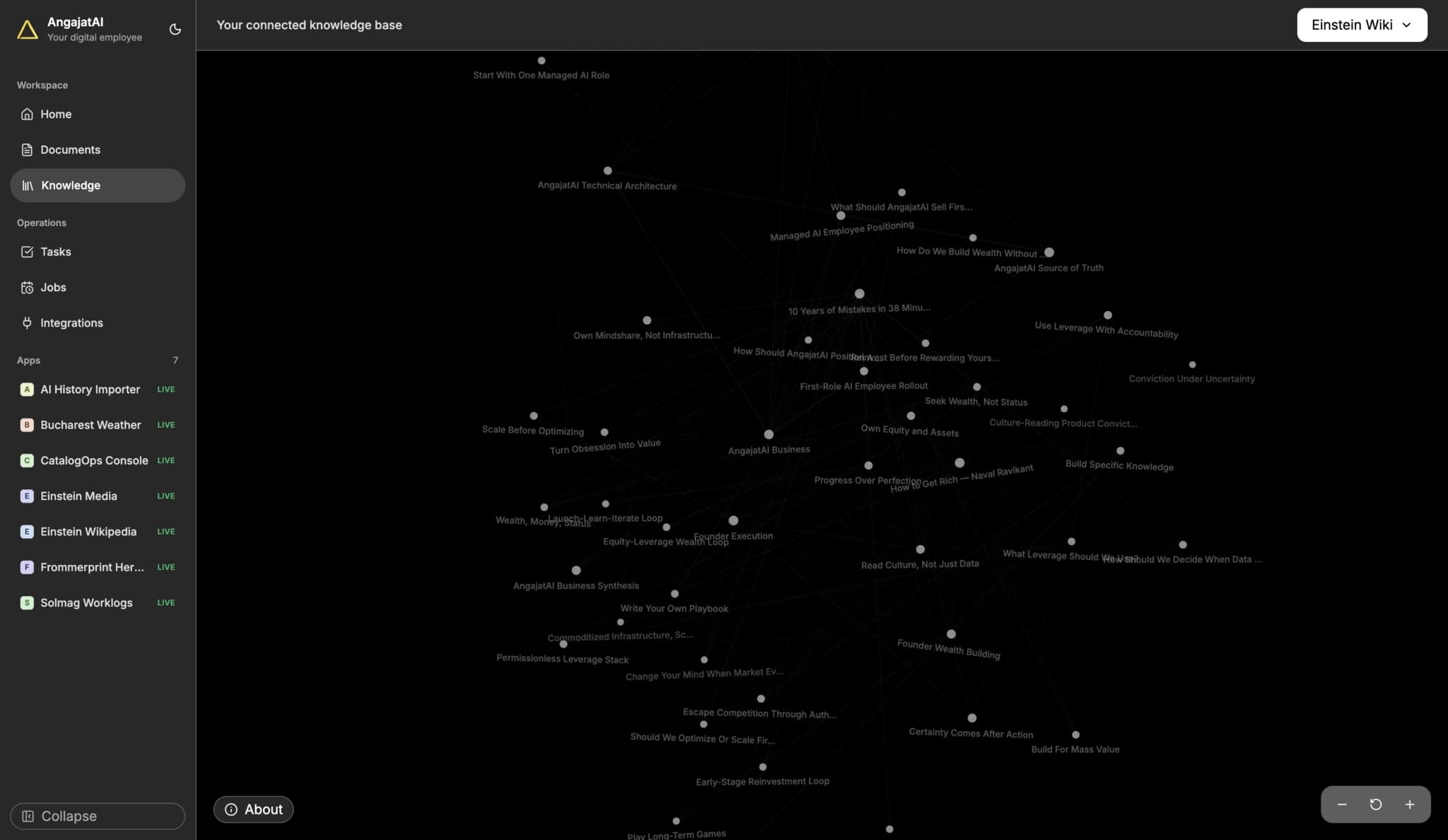
Documents and procedures are connected to a graph memory that exposes relationships across company knowledge.
- 02
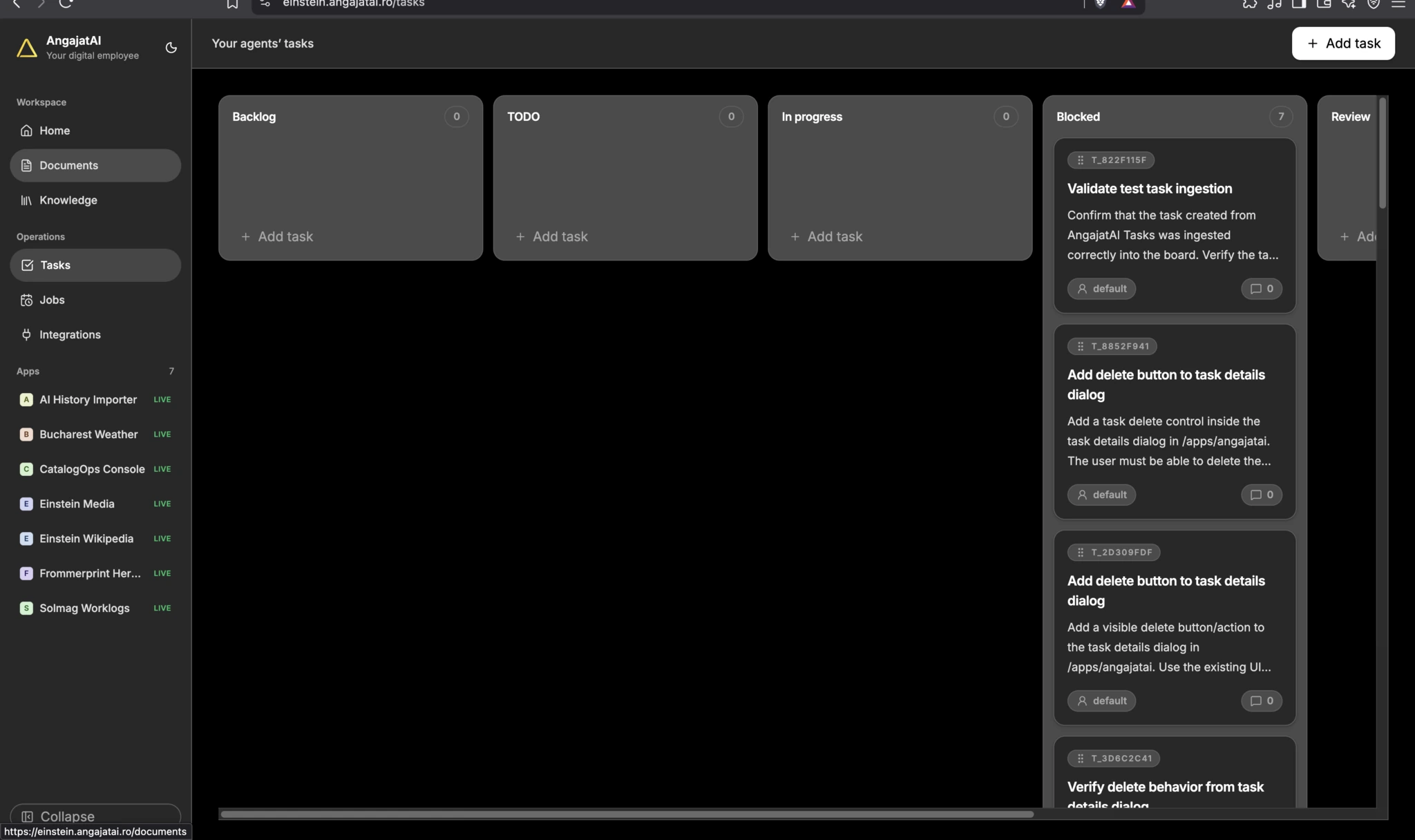
Requests become managed tasks with ownership, progress, blocker and review states for both agents and people.
- 03
Recurring work is defined as scheduled jobs and remains visible in a shared operational calendar.
- 04
Approved integrations and generated sub-applications extend what agents can read, prepare and execute from the same workspace.
Constraints and risks
These conditions shape the architecture before automation begins.
Authority must stay explicit
Each agent, connector and generated application needs defined access to data and actions, with high-impact steps kept behind human confirmation.
Memory needs provenance
Company knowledge changes over time, so agents need approved sources, retained context and a clear way to surface uncertainty or conflicting procedures.
Long-running work must be observable
Tasks and scheduled jobs need durable state, retries, blocker handling and an audit trail so work does not disappear inside a conversation.
System design
A traceable path from intake to action, with uncertainty surfaced before it becomes an operational error.
Agent workspace
A shared dashboard combines conversation, document search, task planning and direct access to company applications.
Graph memory
Documents, procedures and business facts form a connected knowledge layer that agents can retrieve from before answering or acting.
Execution layer
Tasks, recurring jobs, integrations and deployable sub-apps turn agent reasoning into visible, controlled operational work.
Responsibility by design
The system does not treat every task as an AI task.
Deterministic responsibilities
Repeatable rules own validation, state, and system changes.
- Maintain stable task identifiers, ownership, status transitions and review states.
- Trigger recurring jobs from approved schedules and record each run outcome.
- Enforce permissions for knowledge sources, integrations, actions and generated applications.
- Move structured data through direct connectors and controlled application interactions.
- Record retries, failures, blockers and consequential state changes for audit.
- Manage the deployment and lifecycle state of applications created inside the platform.
Bounded-AI responsibilities
AI assists with narrow interpretation work and exposes its basis.
- Retrieve relevant company context from approved documents and graph memory.
- Break requests into tasks, select the next workable issue and update progress as evidence changes.
- Use connected tools within the authority assigned to the agent and escalate exceptions outside that authority.
- Generate focused sub-application drafts from an approved business requirement and connect them to the workspace.
- Explain what was completed, what remains uncertain and which decision needs a person.
Human approvals and exceptions
People keep authority over consequential and ambiguous cases.
- Approve the documents, procedures and data sources that become company memory.
- Set integration permissions and decide which actions an agent may execute without confirmation.
- Review blocked, ambiguous or high-impact tasks before business state changes.
- Approve generated applications, production deployment and any expansion of agent authority.
Integration surface
Connect to the existing operating environment without pretending every tool is a system of record.
- Company knowledge
- Approved documents, procedures and business information used by the graph memory and agent retrieval layer.
- Task and job operations
- Persistent work queues, review states and recurring schedules shared by agents and people.
- Connected applications
- Direct API integrations plus controlled interaction with tools that do not provide a public API.
- Workspace applications
- Generated and deployed sub-apps that provide purpose-built software while remaining connected to agents and company context.
What the engagement should deliver
Not just a demo: the operating model, working system, tests, controls, and handover needed to own it.
- Complete functional proprietary AI agent platform
- Graph memory for business-wide information and procedures
- Agentic task management with ownership, blocker and review states
- Recurring task calendar and scheduled agent jobs
- Application integration layer for API and non-public-API tools
- In-platform application generation and deployment for connected sub-apps
Limitations and next phase
Start narrow enough to validate the operating model before expanding its authority or scope.
- Agent output depends on the quality, freshness and permission scope of the knowledge available to it.
- Controlled interaction with third-party interfaces may need maintenance when those interfaces change.
- Generated applications still require security review, business ownership and release approval before production use.
- Recurring jobs require monitoring and exception handling when a dependency or external service is unavailable.
- The case-study frames are dated captures. The live product remains the source for current behaviour and access conditions.
Possible next phase
Expand the platform one operational area at a time, measure completion, review and rework, then grant broader agent authority only where the evidence supports it.
Your workflow will be different
Turn the blueprint into a system shaped around your tools and controls.
Bring the current steps, owners, systems, and recurring exceptions. The first conversation is for mapping the workflow and deciding whether a custom build is justified.