Published case study — attributed implementation
PaxBespokeBespoke wardrobe manufacturer
Sales automation for bespoke wardrobes.
- The need
- Every wardrobe order starts with a consultation and measurements. The team was copying customer details between tools and manually following up on quotes, signatures and deposits.
- What we automated
- We connected bookings, quotes, e-signatures and deposit invoices, with automatic reminders at each stage. The team keeps control of measurements, prices and exceptions.
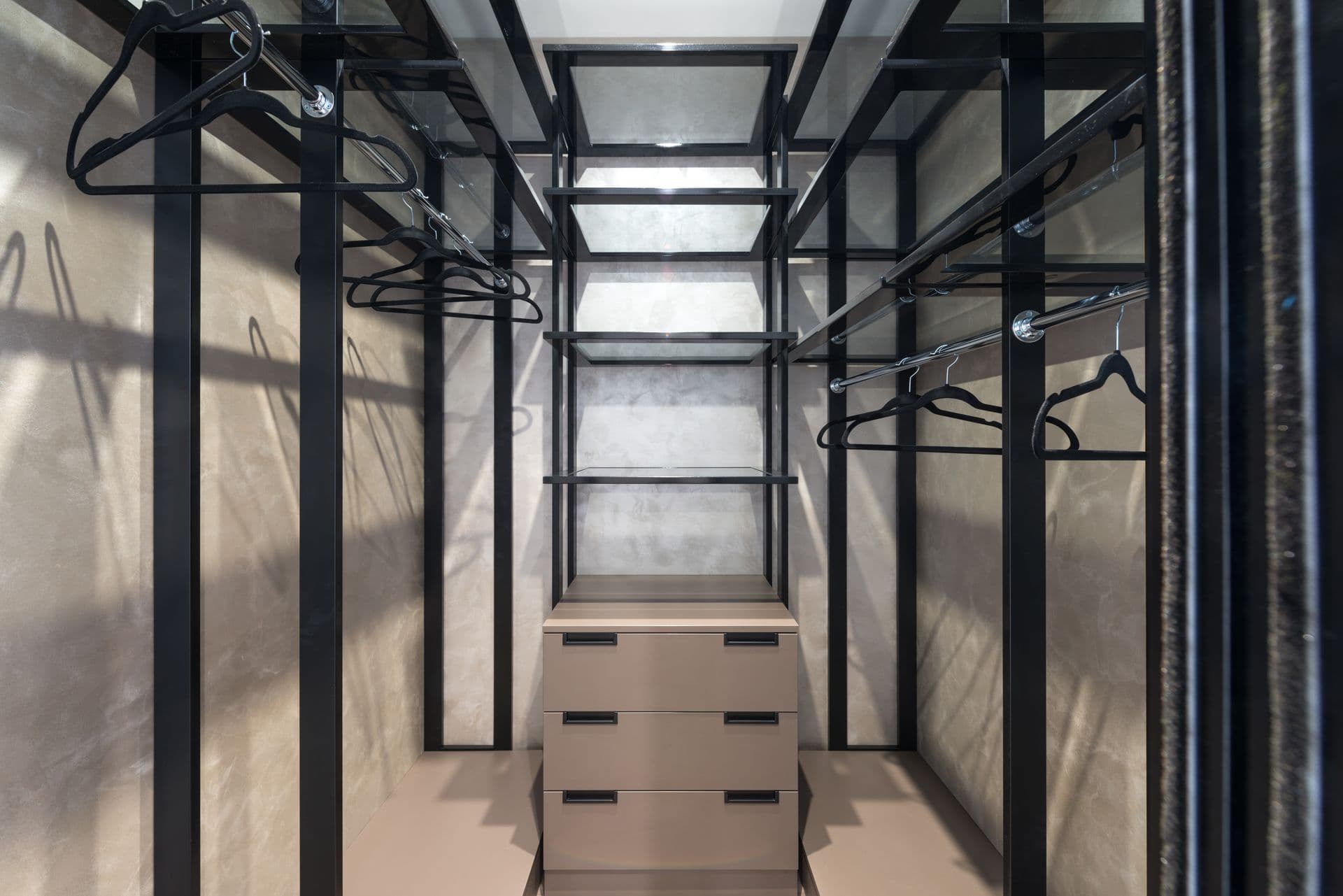
Illustrative stock photo, not project imagery.Max Vakhtbovych / Pexels
Published case study — attributed implementation
This page documents only the structure or implementation supported by the recorded sources. No measured outcome or testimonial is currently approved for publication.
Four automations, one operating journey
Choose a flow and use Previous and Next to follow the story. Notes explain the outcome of each section, while free canvas exploration remains optional.
Choose the automation
Swipe for more workflows
Flow 01 · Operations app
Customer, room, and file data
The layer between the team's interface and Monday.com: find customers, move stages, update fields, and manage photos, measurements, and plans for each room.The operational problem
Customer context was distributed across Monday.com, Calendly, email, documents, signing, and payment services. Repeating the same update across those systems created avoidable admin, while a missed stage change or reminder could leave a customer without a clear next step.
This page separates implemented structure from unverified outcomes or claims. Existing public identities remain bounded by each case's declared status and sources. Any new or expanded identity, testimonial, metric, or verified outcome requires claim-specific evidence and publication approval.
Current-state flow
The repeated handoffs the system is designed to replace or make visible.
- 01
Operators locate the right customer record and translate board structure into the information needed for each interaction.
- 02
Consultation bookings, cancellations, and reschedules need corresponding meeting and pipeline updates.
- 03
Room data and files are assembled into a proposal, then passed through signing and deposit invoicing.
- 04
Follow-up timing across consultation, quotation, signature, and payment stages must be remembered and recorded.
Constraints and risks
These conditions shape the architecture before automation begins.
One customer, many operational objects
The customer record, rooms, files, meetings, proposal, invoice, and provisional dates must move together without becoming competing sources of truth.
Consequential commercial states
Pricing, selected rooms, signed documents, deposits, and reserved dates require explicit rules and visible status changes.
Reliable customer communication
Every reminder sequence must match the customer's real stage and record that it ran so messages do not overlap or repeat incorrectly.
System design
A traceable path from intake to action, with uncertainty surfaced before it becomes an operational error.
Operations interface
A focused form layer gives the team a simpler way to find customers, update details, move meeting stages, and manage files for each room.
Commercial event workflows
Calendly events, proposal requests, signatures, invoices, and payment checks update the right Monday.com records through deterministic paths.
Lifecycle follow-up
Separate scheduled sequences cover consultation booking, quotation, final-proposal signature, and deposit payment without mixing their rules.
Responsibility by design
The system does not treat every task as an AI task.
Deterministic responsibilities
Repeatable rules own validation, state, and system changes.
- Find and update the correct customer and room records from stable identifiers.
- Distinguish bookings, cancellations, and reschedules before changing pipeline stages.
- Generate, store, and route the approved proposal document for signature.
- Calculate the 40% deposit from the approved price and create the corresponding invoice.
- Check payment state after the defined window and apply the provisional-date rule.
- Choose and record each reminder from the customer's current commercial stage.
Bounded-AI responsibilities
AI assists with narrow interpretation work and exposes its basis.
- No generative AI is required to set prices, change stages, generate the proposal, send the deposit invoice, or decide reminder timing.
- Business-critical actions remain based on explicit workflow rules and approved source data.
Human approvals and exceptions
People keep authority over consequential and ambiguous cases.
- Approve room selection, measurements, pricing, and the proposal before it is issued.
- Handle exceptions when customer, meeting, signing, or payment data cannot be matched safely.
- Own customer conversations that fall outside the defined reminder sequences.
- Change commercial policies such as deposit amount, timing, or provisional-date release.
Integration surface
Connect to the existing operating environment without pretending every tool is a system of record.
- Monday.com
- Customer pipeline, room records, files, proposal state, reminder history, and operational ownership.
- Calendly
- Consultation bookings, cancellations, reschedules, hosts, and meeting times.
- Gmail
- Customer-facing proposal delivery and stage-specific reminder sequences.
- SignatureAPI
- Temporary proposal upload, signing invitation, and signed-document callback.
- PayPal
- Draft deposit invoice creation, delivery, and payment-status checks.
What the engagement should deliver
Not just a demo: the operating model, working system, tests, controls, and handover needed to own it.
- Customer and room operations workflow for the team-facing form
- Calendly booking, cancellation, and pipeline synchronization
- Proposal PDF generation, storage, signature, and customer delivery
- 40% deposit invoice and 24-hour payment-status workflow
- Four-stage scheduled customer follow-up system
- Operational note cards and guided public workflow views
Limitations and next phase
Start narrow enough to validate the operating model before expanding its authority or scope.
- The workflows depend on the availability and configured schemas of the connected services.
- The public canvases show sanitized topology and explanations, not production parameters, credentials, customer data, or full message bodies.
- Reminder timing and the provisional-date policy remain business rules that PaxBespoke must own and review as operations change.
Possible next phase
Consolidate execution monitoring and exception handling into one operator view, then add measured reporting for handoff time, failed runs, and progression between commercial stages.
Your workflow will be different
Turn the blueprint into a system shaped around your tools and controls.
Bring the current steps, owners, systems, and recurring exceptions. The first conversation is for mapping the workflow and deciding whether a custom build is justified.